
Dr. Nitin Kumar
Title: Trizonal pattern of Autofluorescence in Acute Zonal Occult Outer Retinopathy
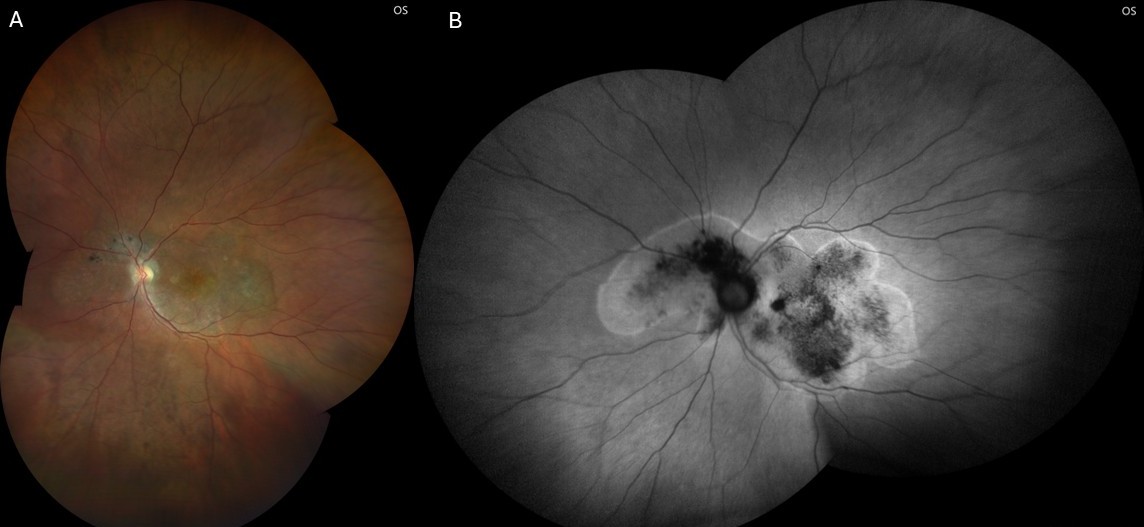
Description: An elderly gentleman presented with photopsia and decreased vision (6/18) in his left eye. The fundus showed the presence of a geographic area of retinal depigmentation and disc pallor
(A). The autofluorescence imaging showed a typical trizonal pattern suggestive of Acute Zonal Occult outer retinopathy
(B). The patient was started on oral corticosteroids, but the vision did not improve. The fundus findings and autofluorescence remained stable over six months.
Dr. Priyanka Vilas Jadhav
Title: CRVO with snake eyes retina
Description:
- A 41-year-old female patient was referred to our clinic with sudden loss of vision in her left eye from 5 days after being bitten by a snake.
- Anti snake venom therapy was initiated immediately.
- Intravenous Methylprednisolone 1 g daily for 5 days was administered and she was referred to our center for further management.
- At presentation, her best-corrected visual acuity in the left eye was PL PR Inaccurate.
- On examination, anterior segment and intraocular pressure were normal.
- A relative afferent pupillary defect was noted in the left eye.
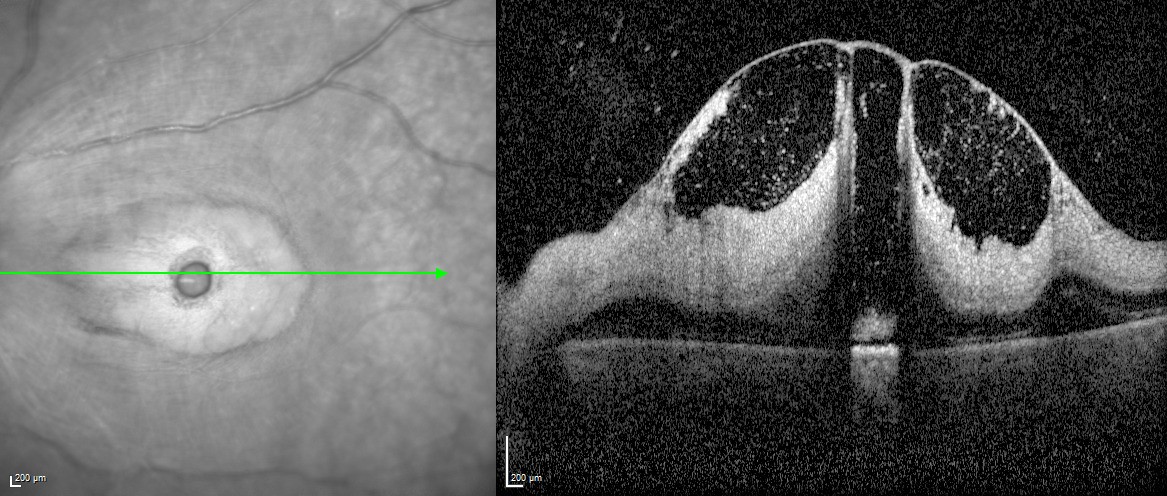
- Spectral-domain OCT demonstrated classic inner retinal thickening with dense hyperreflectivity and hypo reflectivity of outer retinal layers secondary to back-shadowing.
Dr. Shishir Verghese
Title: A series of unfortunate events
Description:
- A 56-year-old male with uncontrolled hypertension presented with sudden reduction of vision in his left eye.
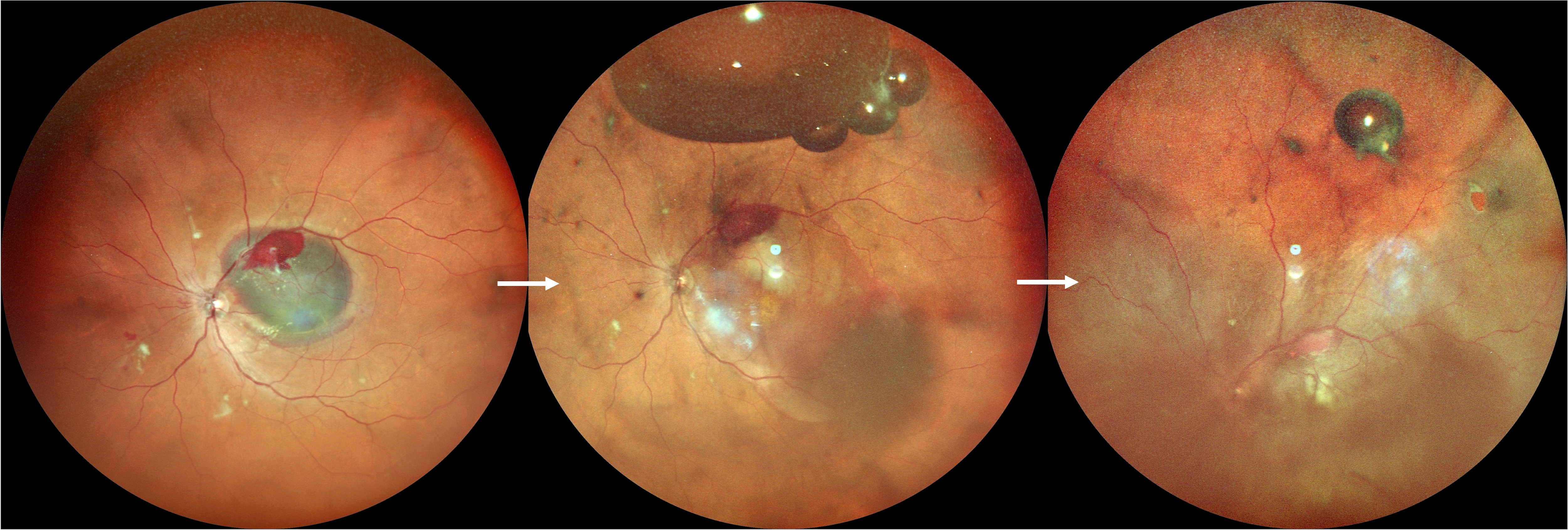
- Clinical examination revealed hypertensive retinopathy in both eyes, with a subretinal hemorrhage in the left eye.
- He was treated with an intravitreal injection of tissue plasminogen activator (tPA) combined with C3F8 gas injection in the left eye, followed by prone positioning to facilitate clot displacement.
- 2 weeks post-procedure, the patient developed a breakthrough vitreous hemorrhage in the same eye.
- At three weeks, the expanding gas bubble caused a retinal break, leading to subtotal retinal detachment.
- This case underscores the critical importance of thorough pre-procedure counseling.
- Patients should be advised about the potential risks of breakthrough vitreous hemorrhage and retinal detachment following intravitreal gas injection.
- Additionally, close postoperative monitoring is vital for timely identification and management of complications to optimize visual outcomes.